The Process Behind Fjords and Fragments
For the Fjords and Fragments project, I needed a way to show how Bodø changes with wind, light, and human activity. I chose a combination of digital and Polaroid i-Type black and white. I take photos in the city with my phone, then work directly on the Polaroid print. This method makes the city’s changes visible and physical, combining what I can control with what happens on its own.
I begin by taking digital photos, usually with my phone. I look for textures, reflections, and shapes that show Bodø’s atmosphere. I focus on contrasts: rough and calm, lasting and temporary.

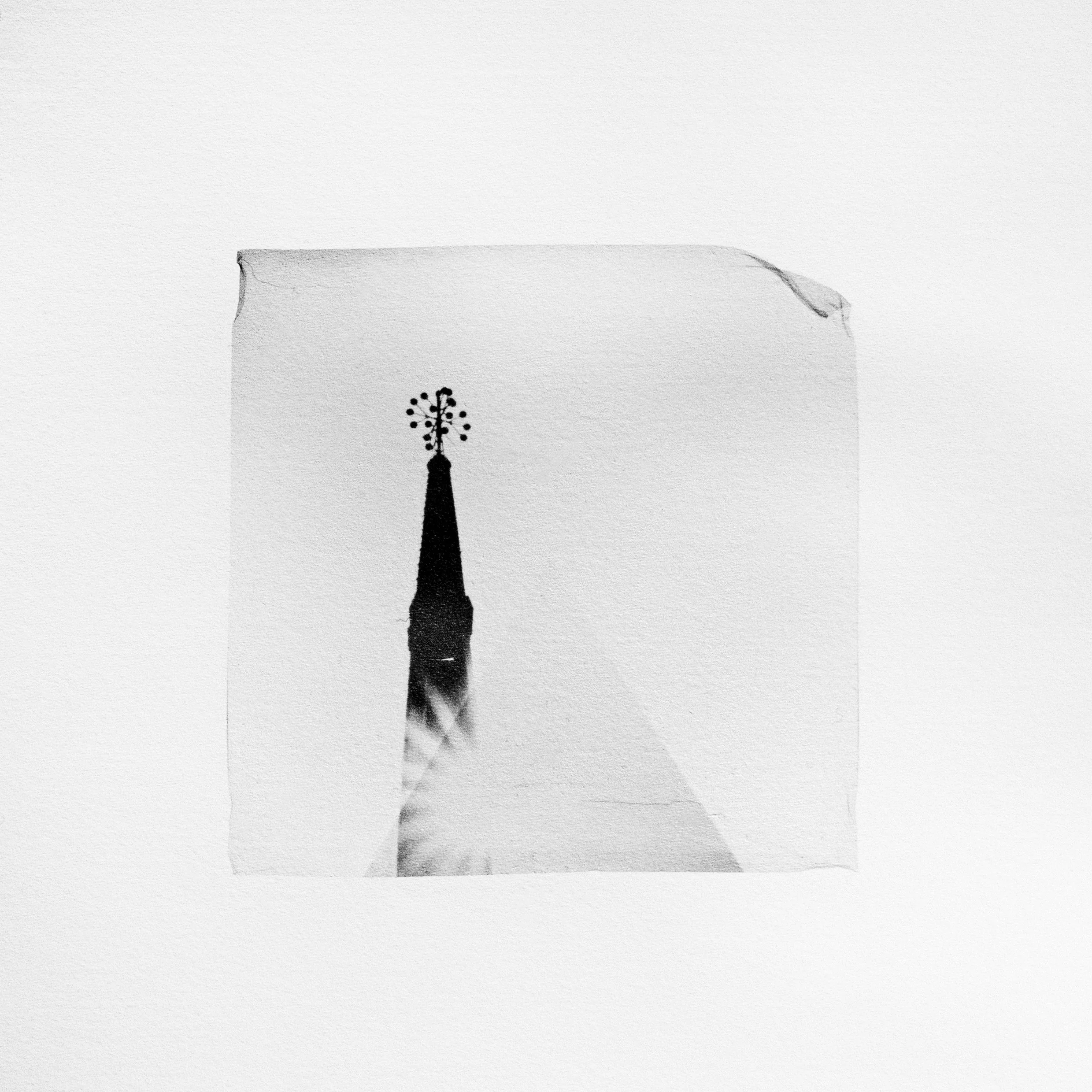
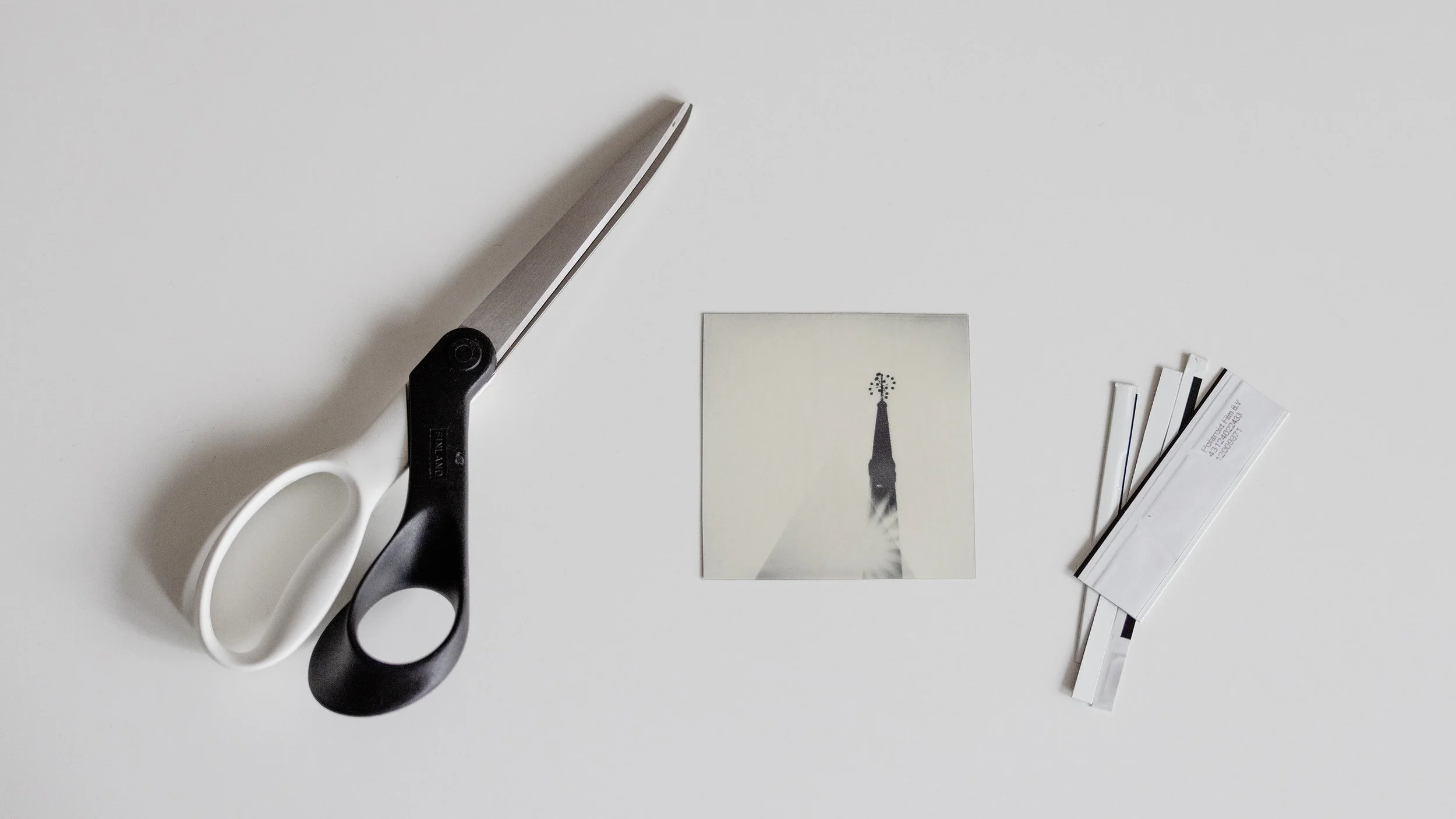
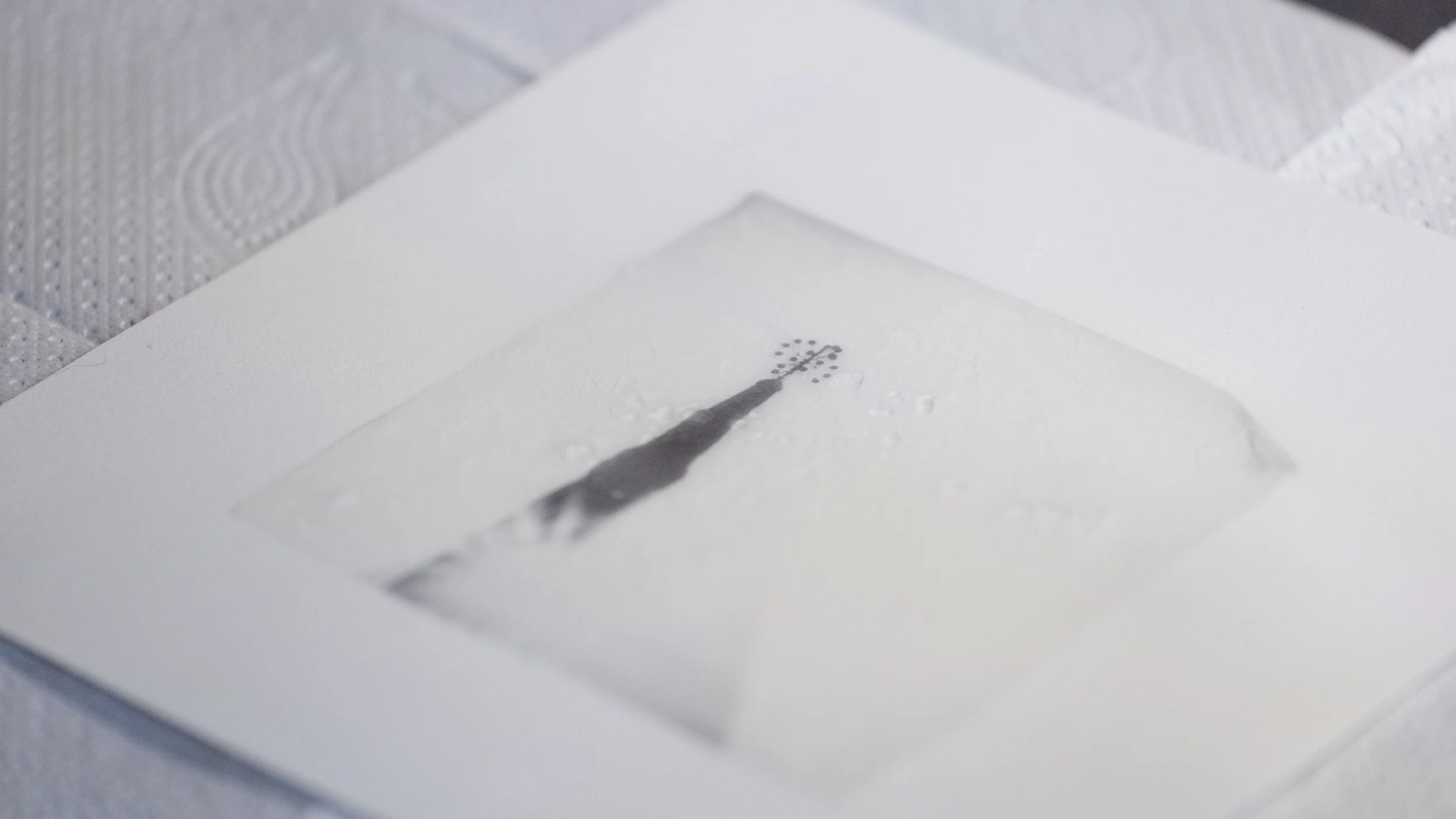
The original photograph shows the top of the concrete clock tower at Bodø Cathedral, built in 1956. The tower is thirty-six metres tall and holds three bells. It is a memorial for people from Bodø who died in the war. I photographed it against the sun, so the flare spreads across the image.
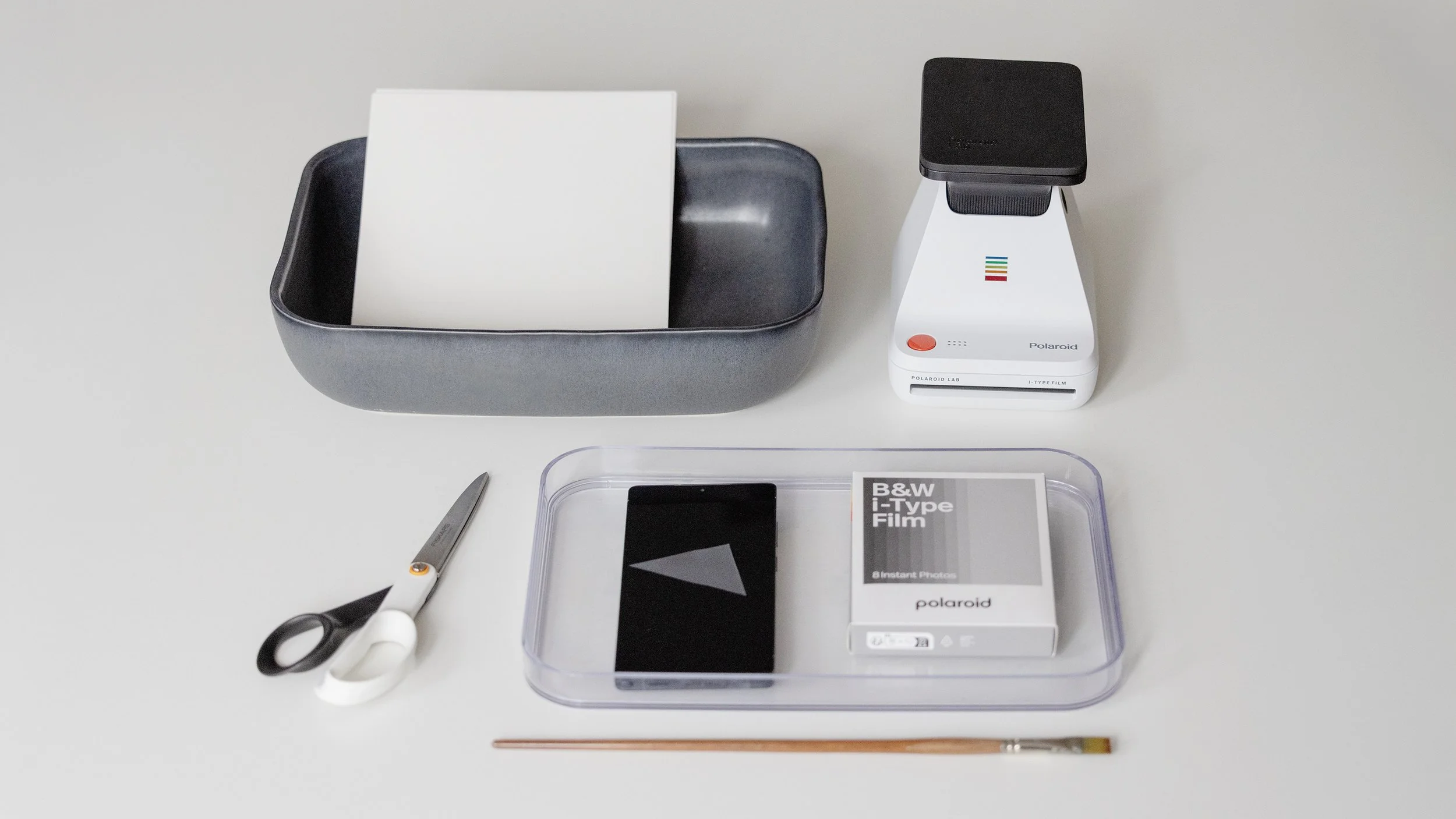
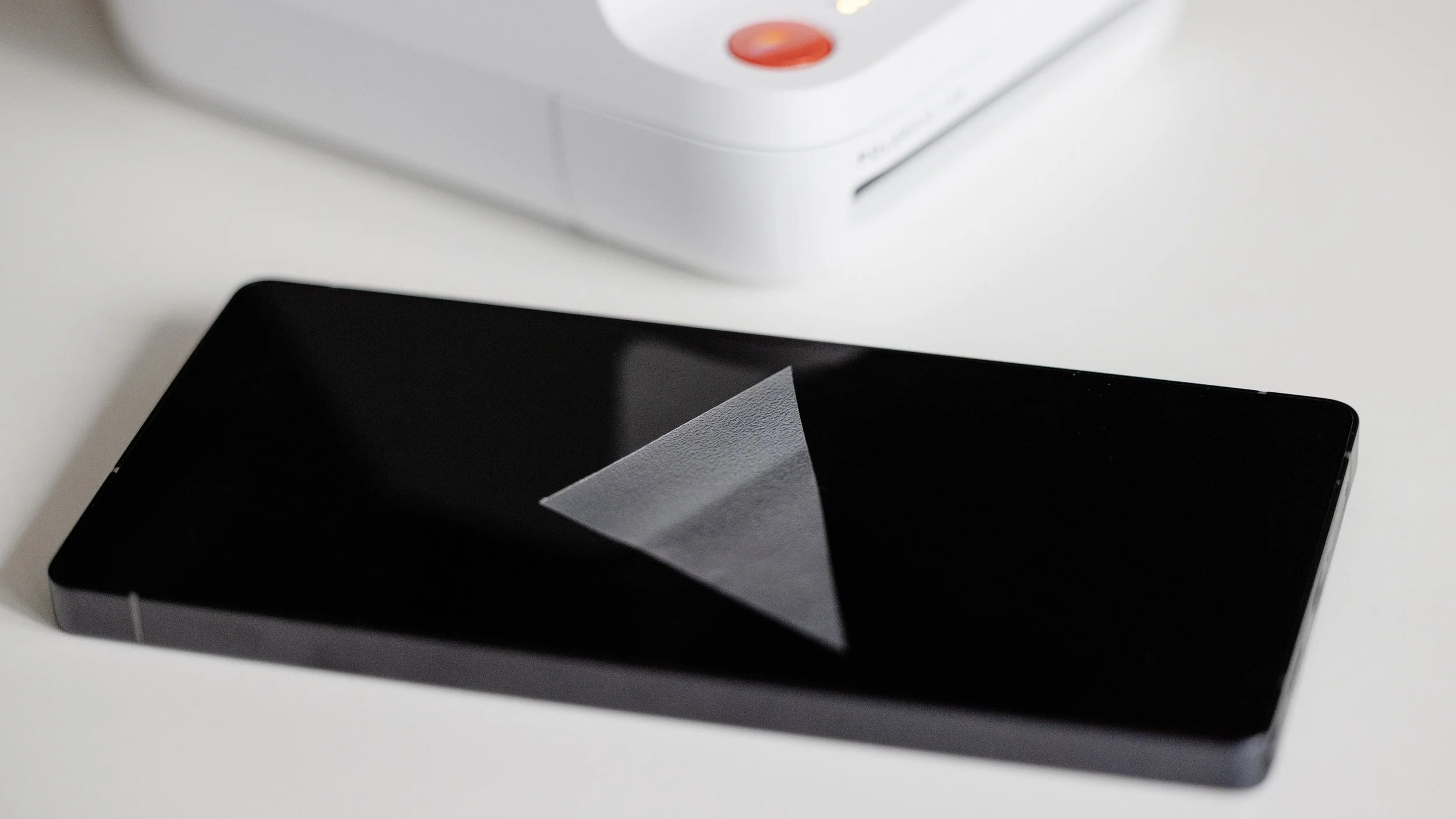
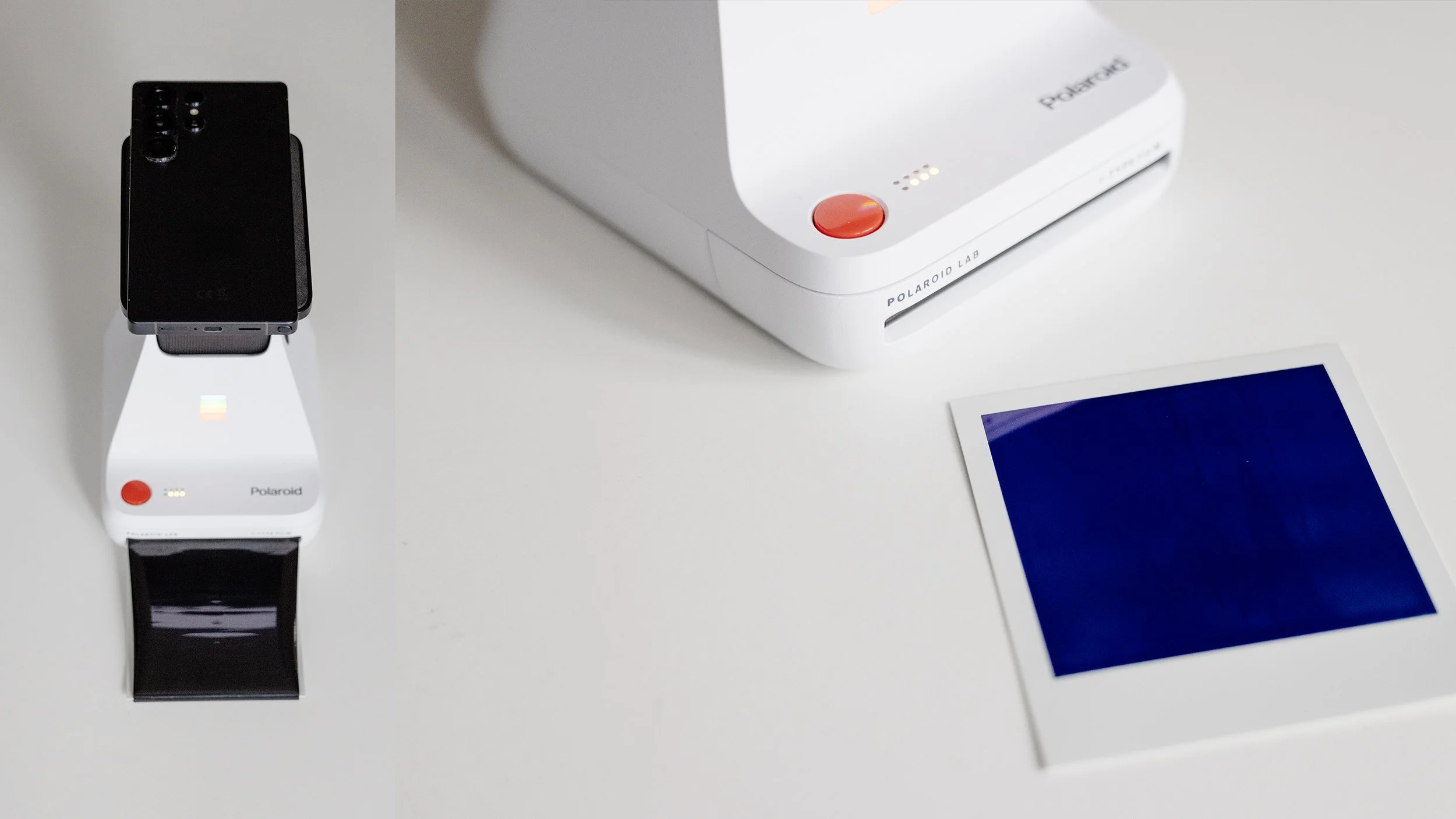
When I find an image I want to work with, I display it on my phone screen and place a small piece of white or grey foil on top, cut into simple shapes like squares, triangles, circles, or lines. I place the phone on the Polaroid Lab printer with black and white i-Type film. The printer exposes both the image and the shapes, making a black and white Polaroid print. I leave it for about thirty minutes before handling it.
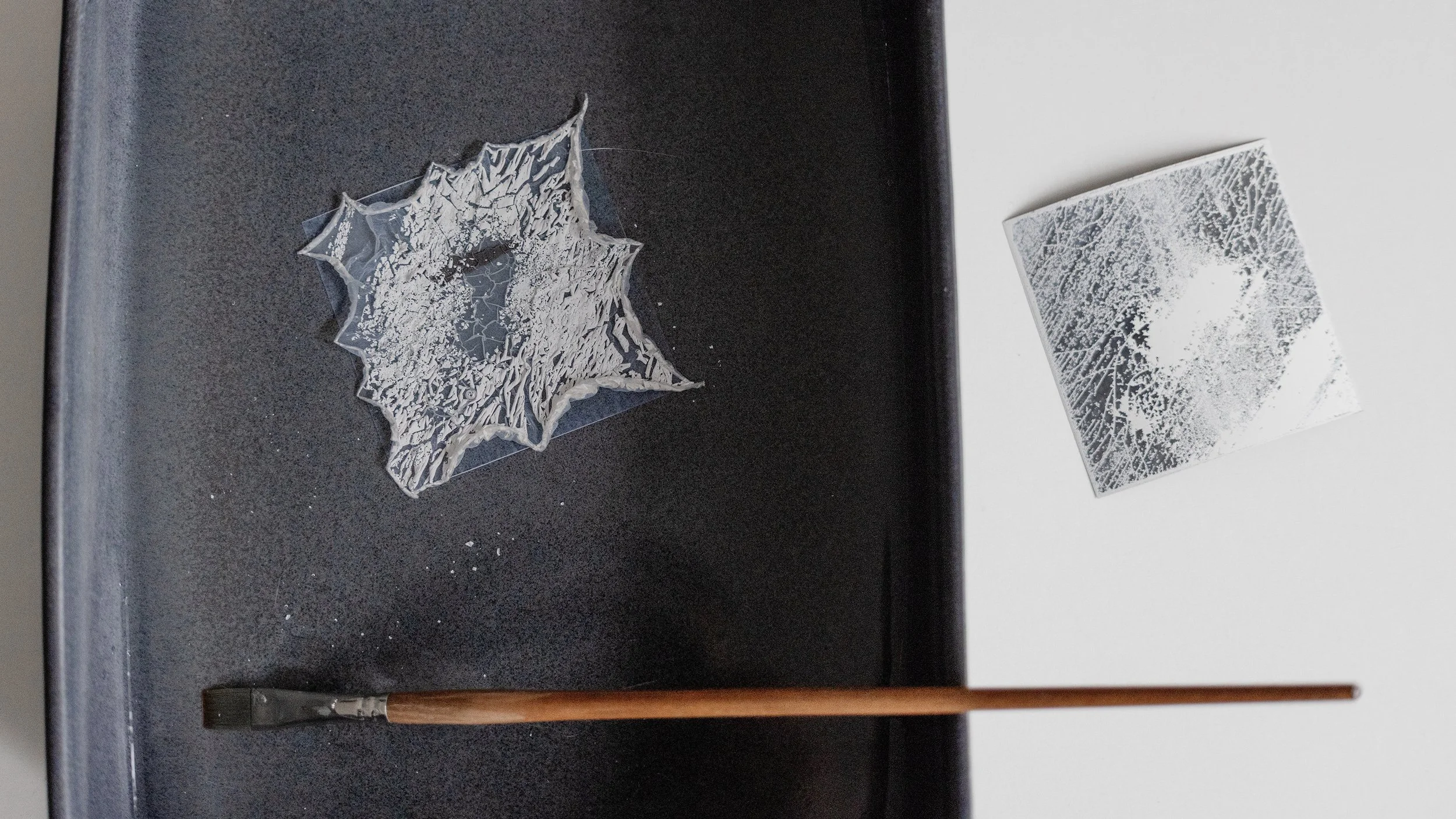
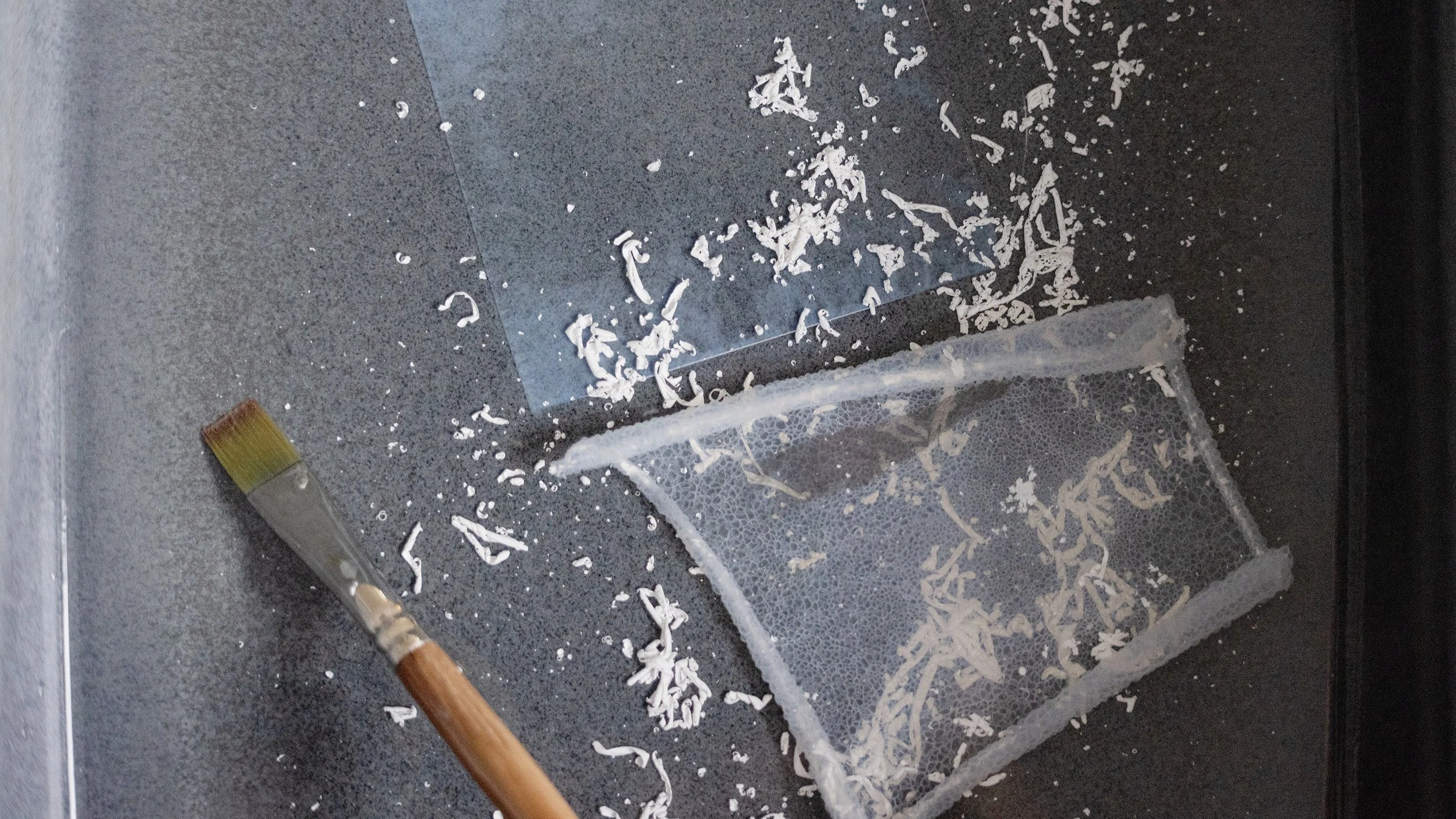
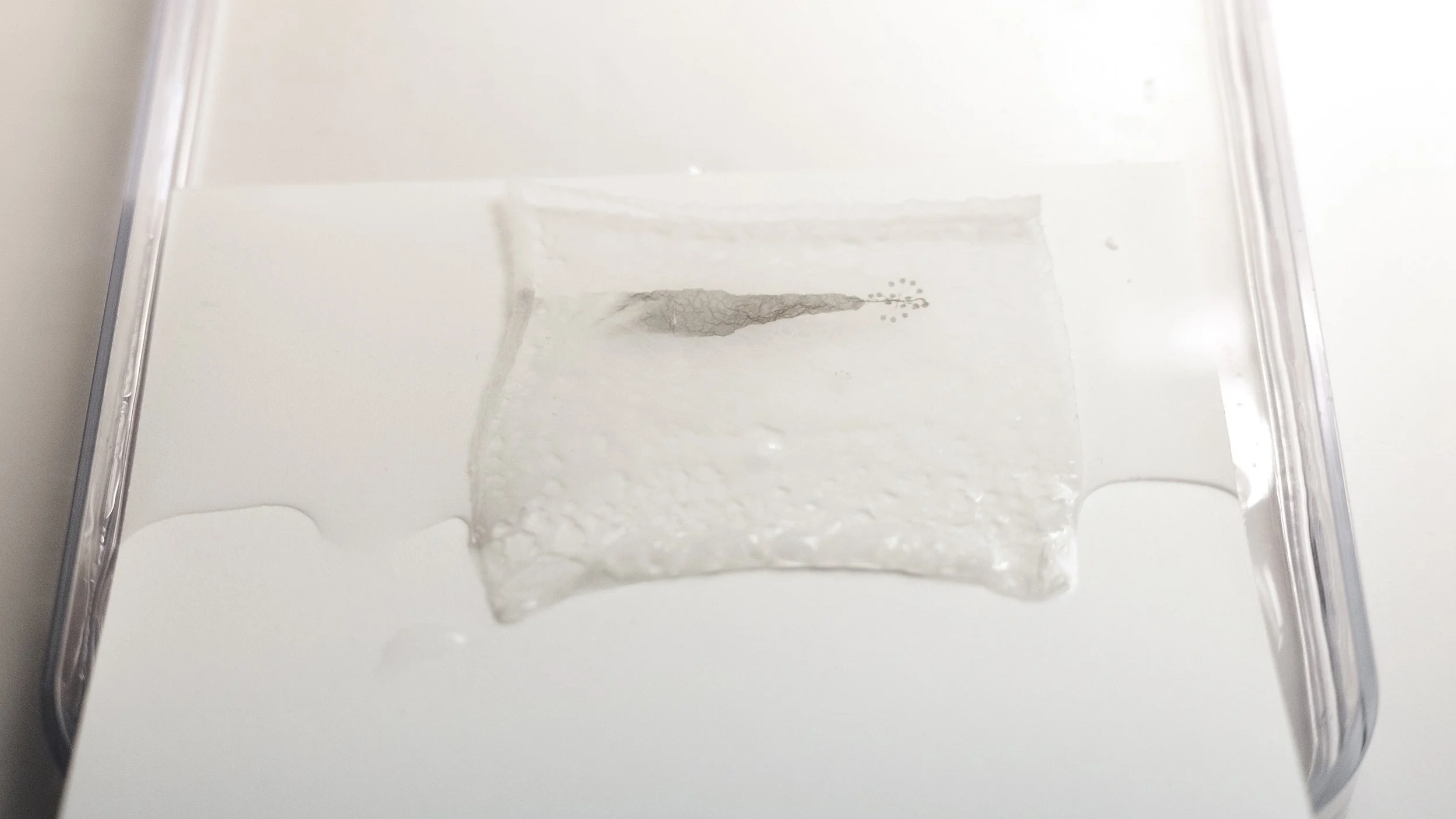
Next, I cut off the white border of the Polaroid and take off the black back cover. I put the clear front cover and the emulsion into warm water. Then, by moving the water with my brush, the front cover and emulsion come apart. Hotter water makes the emulsion come off faster. If it sticks, I brush it gently. I remove any white residue to prevent the image from peeling off later. When it is clean, I move the emulsion to cold water. It floats there and can be moved carefully with my fingers or a brush.
I move the emulsion onto watercolour paper. While it is wet, I shift, stretch, or fold it. Sometimes I use a wet brush to make small wrinkles or creases. These marks stay after the paper dries. Each fold and movement shows what happened during the process. I let the photo dry on the paper for 24 hours, then I use fixative to preserve it.
Working in black and white makes me focus on tone and form. It removes distractions and shows the structure in each image: how light hits concrete, how fog changes a mountain’s edge, or how buildings meet the sky.
This process is slow. It needs patience, careful handling, and acceptance of mistakes. Each print is a piece of Bodø, showing what I photographed and what happened during the process: the water temperature, how I moved my hands, and the time it took.
Bodø changes with wind and human intervention, and these photographs change with water and touch. Nothing stays the same; everything moves.