
Not Being Artist Enough
You are not an artist — you have a full-time job. You are not an artist — you do not create often enough. You are not an artist — you do not exhibit regularly. These are things I have heard. Often.
From the beginning, photography has had to argue for its place in the arts. In the 19th century, it was seen as too mechanical, capturing, not creating. Because it involved machines and chemicals, photography was considered technical rather than expressive.
Many early photographers adopted painterly styles or staged compositions to make their images more "artlike." Even then, photography was often accepted only when it resembled something else: painting, etching, or realism.
It was not until the 20th century that photography began to be widely recognised as a medium of its own, capable of abstraction, metaphor, and visual language independent of other forms. Still, even today, the perception lingers that photography is less artistic than other disciplines.
In philosophy, there have been many attempts to define art. Plato saw art as imitation. The Romantics viewed it as an emotional expression. In the 20th century, theorists like George Dickie introduced the "institutional theory of art": something is art because the art world accepts it as such.
Another approach, proposed by thinkers like Stephen Davies, emphasises intention: art is anything created with the intention of being experienced as art. That definition resonates with me. My work is never casual; it is not just content. I craft my photography to be seen, felt, and contemplated — even if it is subtle, minor, or unnoticed by many.
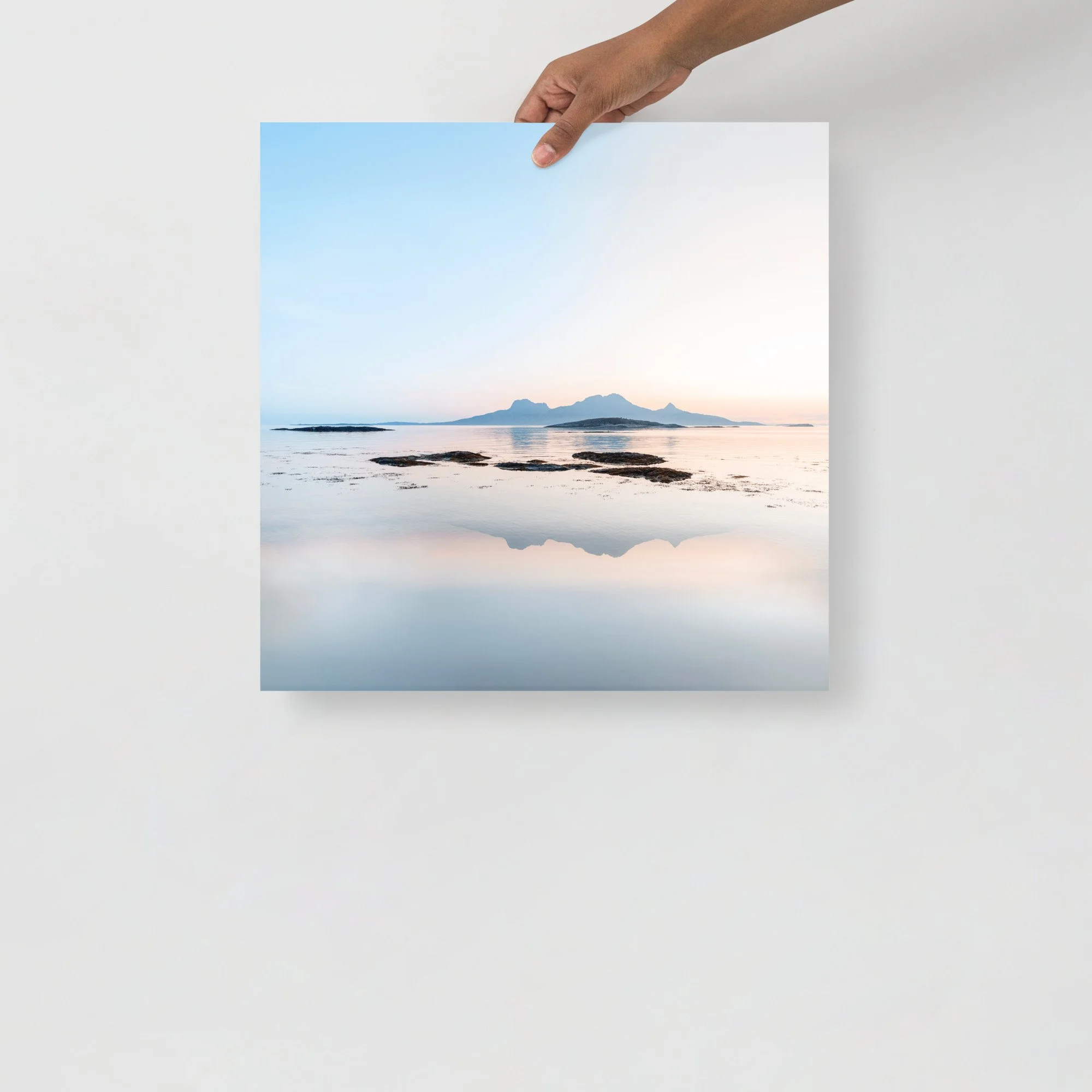
I do not create constantly. I take time to reflect. I pay attention to what is often overlooked and consider questions that are not being asked. When I do create, it is a deliberate act.
I also paint and draw, but I do not consider those things art in the same way. They are a form of rest. I do not do them to communicate or ask the viewer something. I do them to pause. Photography is different. I want to say something there, even if I say it softly.
My work in communication has helped me sharpen that voice. I write and create in many styles at work, depending on the message. As an artist, I return to the same voice repeatedly. My style is minimalist, quiet, and emotionally precise.
I feel most like an artist not when I exhibit, but when I create. When an image finally takes form — one that holds a thought, a mood, or an intention — that moment does not need a gallery. It only needs presence.
The art world often defines itself by who is included — who is visible, who fits the model. But art should question those structures, too. If we say that art is about expression, intention, or transformation, there may be room for those who work differently — those who create beside other roles and listen longer before speaking.
